

The Money Game in 2026
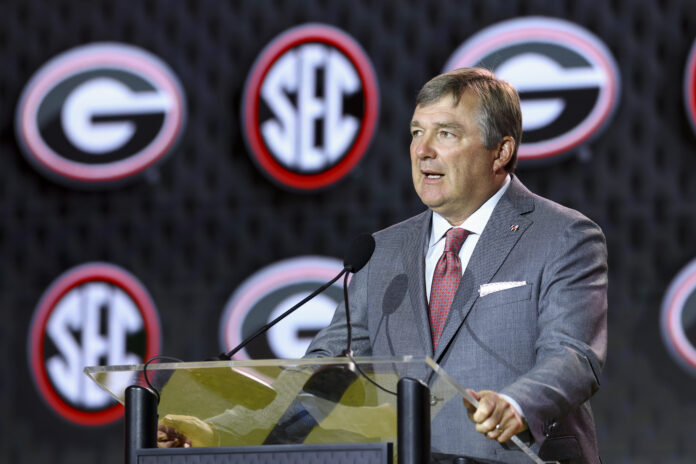
Kirby Smart leads the pack as the highest-paid college football coach for the 2026 season with a $13.1 million annual salary. While he sits at the top, the sport faces massive instability. Fifteen head coaches lost their jobs last year without cause. This firing spree created a combined buyout bill of roughly $270 million for the schools involved. The gap between top pay and high turnover is the real story here. You can see the cash flowing to the winners while the losers pay a steep price for failure. It’s a strange dynamic where the winners get richer and the losers just get stuck paying the bill.
Yahoo Sports CFB (national) reports that numerous top head coaches earn more than $10 million per year. That’s the new normal for the elite, not just a lucky break for a few stars. Even the SEC coaches with the lowest salaries still receive over $3 million for each season. The money is everywhere, but the job security is gone. A bad season can cost a university a fortune in the exit fees it must pay. The financial stakes have never been higher for everyone involved in the game, from the boosters in the stands to the administration signing the checks.
The High Price of Firing Coaches
The 2025 college football season produced a historic coaching carousel, with 15 FBS head coaches fired without cause. This number is staggering and shows how fast schools move on from their leaders. A combined buyout price tag of roughly $270 million resulted from the 15 FBS head coaches fired without cause. That’s a lot of cash to burn just to start over. Teams got a chance to rebuild as 32 jobs opened across the FBS in total, but the cost to get to that rebuilding phase is brutal. It’s hard to justify spending nearly a quarter-billion dollars just to hit the reset button.
Look at the specific numbers that make this so expensive. Texas A&M paid a $77.5 million buyout to fire Jimbo Fisher. That single check covers the salary of many entire teams. Penn State originally anticipated paying $49 million to fire James Franklin. Brian Kelly at LSU has a staggering $54 million buyout. Dabo Swinney has a $60 million buyout as well. These aren’t small fees; they are life-changing sums of money for the universities. Schools are locking in coaches with deals that make leaving almost impossible, which means when they do leave, the check has to be massive.
Winning Is the Only Way to Stay
Bill Belichick isn’t even among the top 10 highest-paid college football head coaches. This fact proves how much the game has changed. A legend in the NFL can’t match the pay of college stars because the money is tied to the brand and the TV deals. The coaches who stay on top must win every year. Dave Aranda is in his seventh year at Baylor with a record of 36-27. He has kept his job, but the pressure is mounting. Baylor went just 5-7 overall and 3-6 in conference play last year. The team placed 11th out of 16 teams. One more bad year could end his run.
Deion Sanders is in his fourth year at Colorado with a record of 16-21. The results are mixed, but the name brings the fans. Colorado is coming off a 3-9 showing and a 1-8 mark in conference play. The fans are loud, but the wins are thin. Scott Satterfield is in his fourth year at Cincinnati with a record of 15-22. Cincinnati was 7-6 overall but lost its last five games. Losing at the end of the season is a dangerous trend. These coaches are walking a tightrope where one slip means a multi-million dollar exit for the school.
The high salaries and huge buyouts change how you watch the game. Every loss feels heavier because it costs the school so much money. When a coach gets fired, the fans feel the shock of the buyout bill. The schools are betting big on their coaches to deliver a championship. If the coach fails, the university pays a price that hurts its budget for years. The gap between the rich programs and the rest is getting wider. The top coaches get paid like movie stars, but they have to perform like athletes. According to Yahoo Sports CFB (national), the financial landscape is shifting fast, and there’s no going back to the old days of cheap contracts and long tenures.